El-Branden Brazil

Photographer, Writer & Mystic Traveller

Posts from the ‘Thoughts About Our World’ category

The Nomadic Species

The world is not one of exactitudes of ethnicity, but rather one of fuzziness and blurring between groups of people, especially those living on the borders of countries.

Borders are illusions that have no geographical reality, but are constructed out of fear and perceived cultural biases/similarities. However, the truth is that humans have always been a nomadic species, transmigrating across the globe and intermingling, long before there were laws, visas and passports. This is most certain to continue, whilst we remain guests on our planet. Indeed, there is every likelihood that humans may one day migrate to Mars and beyond.

There are two ways to respond to this reality. The first is to take the response of Nationalists, who fear that there will be some sort of cultural/ethnic dilution of their group, if there is an influx of people with customs and ethnicity different to their own. And, most certainly, this is a two-way state of affairs, that can manifest on both sides, bringing with it racism, violence, segregation and hate.

The second and more preferable option, and the one that seems to wholly embrace the inevitable, is to just appreciate that everything is in a natural state of flux, including culture. Accept that nothing remains the same forever, including ethnic identity. Embrace diversity and look for common humanity in all.

A Camel In The Gobi
A Nomad Of The Mongolian Gobi Desert
Photography by El-Branden Brazil

Make A Difference

Let’s all work for peace, and encourage an end to all suffering.
Let’s continue to campaign for those who need help and support.
Let’s change the world with positivity and love.
Let’s find friendship with those we thought could never be our friends.
Let’s be tolerant and appreciative of the diversity of lifestyles and faiths.
Let’s try to become informed about the things we don’t understand.
Let’s make bridges between all nations.
Let’s be resolute in finding inner peace and beauty.
Let’s be wise in every decision we make.
Let’s be generous in spirit and heart to those in need.

– El-Branden Brazil

Ashin Sopaka Arrives At The Dump
Ashin Sopaka, one of the leaders of Burma’s Saffron Revolution, has been supporting Burmese refugees and migrant workers, who live on a dump in Mae Sot, Thailand.
Photography by El-Branden Brazil

Mystical Encounters Of The Unexpected Kind

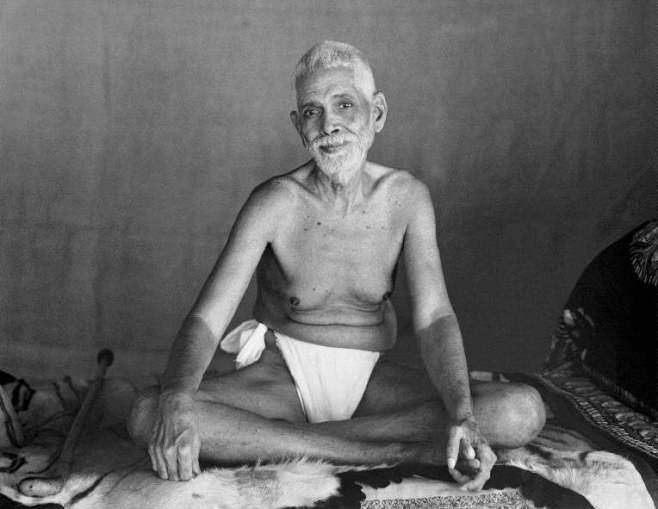
ramana_wideWhilst I was visiting Kochi in southern India, in 2004, I purchased a book, A Search For Secret India by Paul Brunton. It is a wonderfully nostalgic read, as it was written back in 1933. The book charts the adventures of the author in his quest to find genuine gurus and purveyors of Truth. What attracted me to the book, was the backcover’s claim that Mr Brunton finally discovered a true master. Regardless, the book was an enchanting travel companion.

As my journey in India was coming to a close, I found myself in delightful Pondicherry. I had reached a point where I was too close to Chennai to make any further long distance excursions, but I did not want to spend all my remaining time in either Pondicherry or Chennai. I asked some of the tsunami relief volunteers I had worked with, if they recommended any places to visit. They suggested that I go to Thiruvannamalai, which is located about two and a half hours drive inland from Pondicherry, because it is home to one of Hinduism’s holiest temples. I had no knowledge of this place, but it seemed conveniently located for my return journey to Chennai.

The night before my departure, I arranged for a car to take me to Thiruvannamalai. The Hindu man who helped arrange my driver, asked me if I was visiting the ashram (a spiritual hermitage or a monastery). I had no idea which ashram he was talking about, but rapidly our conversation evolved into one concerning mystical issues. I was immediately taken by the tone of this enigmatic and fascinating man. As I was leaving, he grabbed both my hands, and with deep conviction, asked for God to touch me. It was unexpected and very potent.

The next morning, a driver was there waiting for me at my hotel. When I got into the car, he asked where I was staying in Thiruvannamalai. Before I could even answer, he suggested the ashram. Since I had not yet organised a potential hotel to stay, I agreed to be dropped off at the mysterious ashram that I had no knowledge of at all. At least when I stayed at Amachi’s ashram during that Christmas, I knew of her movement.

As we approached Thiruvannamalai, I was immediately struck by the dominating mountain of Arunachala – a giant rocky peak of red and grey stone. In my ignorance, I did not realise that I was at one of the holiest Hindu sites, where the god, Lord Shiva, is thought to reside. Pilgrims climb the steep, stony peak barefooted each day.

In the shadow of the mountain, is the impressive Arunachala temple. It is very similar in design and scale to the temples found in Madurai, except the towers remain in their natural stone shades, as opposed to the usually gaudy-painted variety.

We finally arrived at the enigmatic ashram. I paid my driver and headed through the gates. As to be expected, I discovered the usual Indian-garbed Westerners, as I walked up to the office. I asked for accomodation, but was abruptly told that without a reservation it was impossible to stay. The manner was very curt, so I decided to leave immediately. I was, to say the least, unimpressed. I took an auto rickshaw back into town, and managed to get a basic, but very clean room at the friendly Trishul Hotel, which is located very closely to the temple.

After strolling about the vibrant town, I settled in for the night with my engrossing book, A Search For Secret India. I was flicking through the back pages, when suddenly the word “Arunachala” caught my eye. As I read further, the guru who had so impressed Paul Brunton in the 1930’s, was none other than Sri Ramana Maharshi, the guru whose ashram I had briefly visited that day. Suddenly, Brunton’s book came alive, as he described places that were all around me. I had to find out more about this guru who I knew so little about.

In Brunton’s book, he describes astounding experiences shared with Maharshi, who would meditate for hours a day. According to various biographical sources, it seems that Maharshi had been profoundly moved by an experience he had when he was 16, where he was given an insight into the nature of death. After his mystical revelation, against the wishes of his parents, he travelled from Madurai to Arunachala, where he remained until his death in 1950. He desired no followers, gifts or support, other than donations of food, and spent his younger years in a tiny cave on the mountain. Gradually, this charismatic man soon gained a reputation for his incomparable insights, and a small, basic ashram was built for him, at the base of Arunachala.

Brunton, who had searched across India for men of divine wisdom, finally found Maharshi, and was immediately taken by this great man. What impressed him enormously, was Maharshi’s lack of interest in acquiring disciples of any type. People who shared space with Maharshi, were often touched by some sort of exceptional vibration that would imbue a taste of enlightenment.

This certainly engaged my interest, and I was particularly curious about the manner in which I had ended up in this town. There were so many synchronistic moments that seemed to have some underlying reason for I being here. Of course, it could also be down to chance and coincidence, but the magic of India had intoxicated me with spiritual potentials. Instead of staying only a couple of days, I had to extended my time.

Recently UpdatedWhen I returned to the ashram the next day, I was immediately aware of how simple and small it was, compared to the grandiosity of the other ashrams I had visited. This was not a place designed to impress or convert people; it was rather a humble place of devotion and meditation. Even the Westerners there, seem like a calmer, less phony group. Perhaps, the teachings of Maharshi are so precise that there is no room for the luxury of phoniness.

I must admit, as I sat next to the hall where Brunton had experienced such an overwhelming connection with Maharshi, all those years back in 1932, I felt that this was the closest that I have perhaps ever come to a truly enlightened man, even though he had passed away so long ago.

The motivation that drove Maharshi was entirely selfless and unique, with none of the self-promotion that follows so many gurus. Maharshi’s teachings, as I rudimentarily understand them, are entirely in accordance with the deepest insights to be found in all religions. He does not promote a particular religion, but rather a way forward for attaining happiness. What an honour it was to discover one of those rare lights of humanity.

I later met the Indian man who had been curt with me previously when I arrived, and found him to be charming and informative. Walking around the ashram undisturbed, it gave me enormous pleasure to find the spots where Brunton had experienced incidents so long ago. The calm of that humble ashram will remain forever with me, and I hope that I will once again visit.

Unbridled Capitalism

Capitalism right now is a rigged game, where only a few have the privilege to write and rewrite the rules in whatever way suits them. As their wealth increases, and they buy themselves into the politicians’ pockets, the rest of us see social benefits in health, education and welfare stripped down, salaries reduced, bills increasing, fears growing and many families unable to adequately feed themselves.

I have no problem with the idea that if you work hard, then you should be rewarded. However, I do have a problem with individuals driven merely by an unquenchable, psychotic thirst for money, who place higher value on greed than compassion for their fellow humans. I have a problem with those of limited talent, but due to birthright, are allowed unfettered privilege. I also have a problem with individuals who are paid millions and millions of dollars in pay-offs and bonuses, whilst smirking and sneering at the rest of us, as we are exploited, sold-out and perennially broke. I despise that those who almost destroyed the global economy, neither see jail cells nor are reprimanded, but instead see their wealth grow on the back of our misery; misery they helped to create. Worst of all, are the scum who find profit in wars.

All I wish to see are mechanisms that are fairer, compassionate and allow for a more even distribution of wealth. The sooner this unbridled capitalism becomes aware that, just like tooth fairies, there is no such thing as sustainable, infinite exponential growth, the sooner we can reel things back in, protect the planet, end poverty and raise sustainably the living standards to a level better for all.

It Shouldn't Have To Happen
Photography by El-Branden Brazil

The Art Of Tolerance

I call myself a Buddhist, but I believe that such labels are irrelevant. I cannot be certain, but I like to believe that Christ was a Buddha, although he was not a Buddhist.

The reality is that such labels only divide us in our mutual search for Truth. Calling yourself a Christian, Muslim, Hindu, Jain, Pagan, Buddhist, Atheist, Agnostic… whatever, does not give you the privilege to Truth alone. To investigate reality, we must first engage with it, looking beyond the preconceived, conditioned cultures we are indoctrinated into. We must step out of the comfort zones we inhabit, open our minds and embrace the possibility that we might well be wrong. Just search, question and seek absolute truths, even if you never find them, because they do exist.

Surely, whilst we may ALL be wrong in what we believe in, the least we can do, in this vast, unanswered moment in space and time, is to hug and love our brothers and sisters of different faith. Our faiths might be unprovable, but LOVE AND COMPASSION ARE ABSOLUTE, because we have all seen the results they bring. The abstract dimensions of faith should be less of a priority, whilst the direct actions of love and compassion amplified, because, regardless of faith, these are qualities that bring positive effects to all.

Friends
Photography by El-Branden Brazil

Thresholds To Secret Gardens

Photography by El-Branden Brazil

Photography by El-Branden Brazil

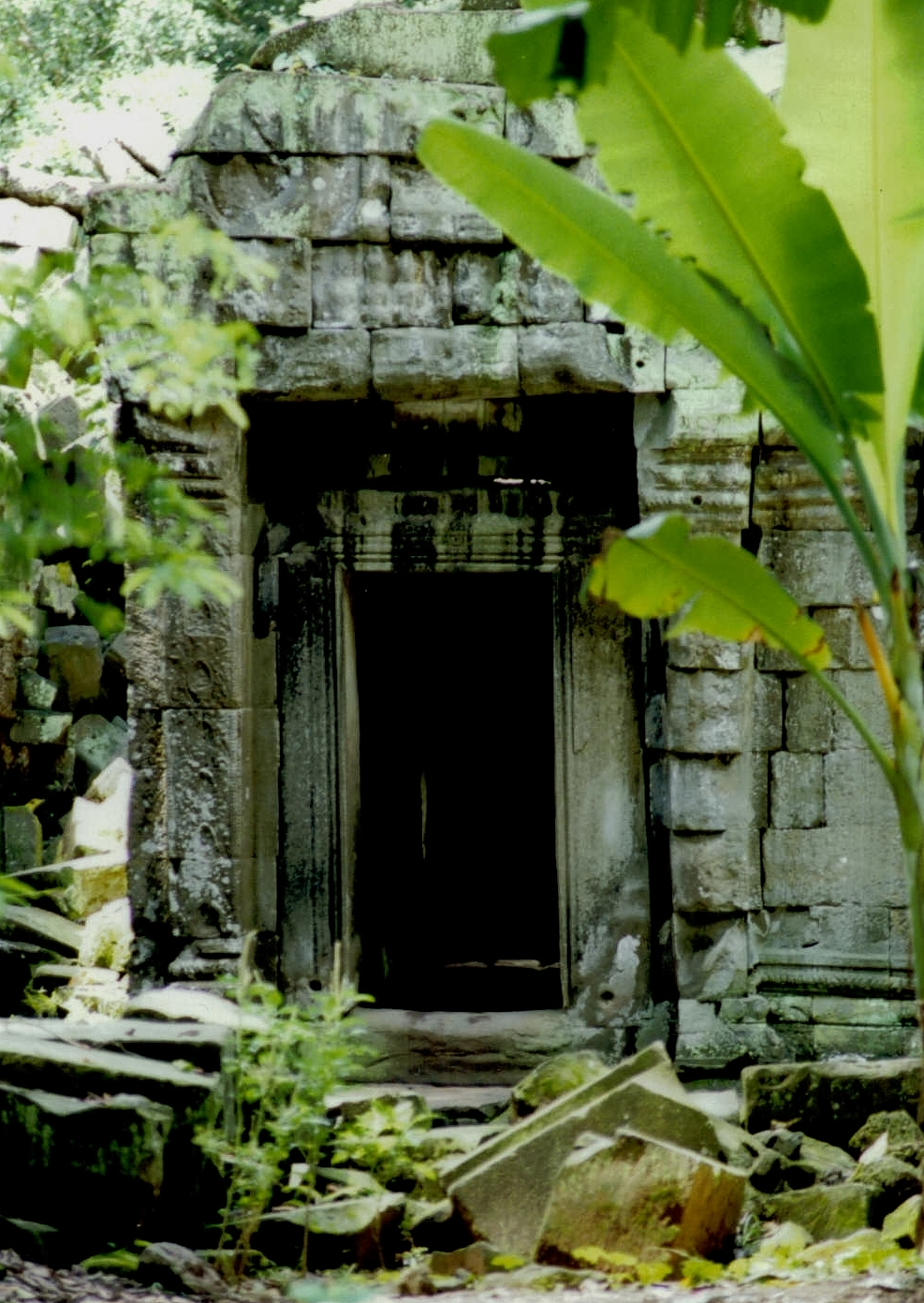
In fantasy literature, a reoccurring theme that is present in a vast number of classic tales, is that of portals to other worlds.

Whether it is Lewis Carroll’s Alice In Wonderland, J.M. Barrie’s Peter Pan, Frank L. Baum’s The Wizard Of Oz, Alan Garner’s Elidor, H.P. Lovecraft’s Dreamlands, or J.K. Rowling’s Harry Potter series, all the heroes and heroines of the tales are drawn into exotic lands through some magical entrance between two realities. Arguably, the most popular stories to utilize this theme are C.S. Lewis’s classic Chronicles of Narnia; the most famous being the wardrobe in The Lion, The Witch & The Wardrobe.

This literary tradition has a deep root in human consciousness. Throughout the history of humanity, whether it be through religious, scientific or mystical means, the exploration of inner space, has allowed access to levels of reality and existence beyond the senses. All great art is a manifest of the hidden, whether it is an emotional response in abstraction, or a piece conjured up from within the imagination.

In Aldous Huxley’s The Doors Of Perception, he writes about the powerful experiences he had whilst using the hallucinogenic chemical, mescaline. Again, the metaphor of a door or entrance is used to express the boundary between the everyday world and that of the altered state.

It was Huxley’s conviction that certain substances could open the mind to a reality untainted by sensory prejudices. This belief was not his alone, and has been an integral part of shamanic beliefs the world over, for thousands and thousands of years. It is by no accident that Alice ingests strange chemicals on her journey through Wonderland.

The creation of sacred spaces within a religious context, whether as a church, temple or shrine, or an improvised circle for ritual, are all places where everyday consciousness is banished, and altered states invoked. When we enter a place of worship, the symbols that surround us, trigger a referential change within that allows for prayer, communion with God, or the manifestation of spirits and magic.

The ultimate portal, which is the driving force behind all others, is death – the passing from one state of existence into another. At the centre of all religions, concepts of death dominate; even for the Atheist, who believes that it leads to a bleak black slumber of non-existence.

Shakespeare writes rather solemnly of the crossing over in Hamlet:

‘But that the dread of something after death,
The undiscover’d country from whose bourn
No traveller returns, puzzles the will
And makes us rather bear those ills we have
Than fly to others that we know not of?’

In J.R.R. Tolkien’s The Lord Of The Rings, there is a beautifully reassuring passage describing the threshold of death:

The grey rain-curtain turned all to silver glass and was rolled back, and he beheld white shores and beyond them a far green country under a swift sunrise.’

Knowing Truth

Wouldn’t it be spectacular to step beyond faith, speculation, cultural indoctrination, hearsay, imagination, fantasy, convenience and lies, so as to really know what ABSOLUTE TRUTH is? To truly know what lies beyond the universe? Is the universe a construct of our minds? Do we live in a holographic universe? What is the purpose of the universe? Is there life after death? What is time? Does God need to exist? Is it all but a simulation? If so, who built the simulation? Is there no purpose to anything? Is ultimate reality inherently empty? Does intelligence exist elsewhere? How is consciousness possible? What is the mind? What are we? What am I?

…to know if the dream is a dream.

Photography by El-Branden Brazil

Photography by El-Branden Brazil

Forgiveness

It is true
That as I lie here
In my final throes
I recall with painful clarity
All the suffering I had caused.

It is true
That I regret so much
And if I could
I would resolve right now
Every hurt, every scold
Every pain that you endured.

It is true
My life is ending.
How I could have lived it well
If I had listened
Been a friend
Instead of selfish, mean and cruel.

It is true
It is ALL true
That I had done you great wrong
And now as I lie here dying
With you sat there
By my side.

It is true
That your kindness brings shame
As you talk and hold my hand.
For if our roles had been reversed
I doubt
I would have done the same.

It is true
Your compassion helps me
Understand all that I have missed
And in my desperate fading moments
I have this chance to make amends.

It is true
I beg forgiveness
As my body begins to fail
To which you gently inform me
That you forgave me long ago.

 – By El-Branden Brazil

Photography by El-Branden Brazil

Photography by El-Branden Brazil

When Swords Collide

When I was young, I had fanciful notions that perhaps, one day on earth, world peace could be achieved. Now that I am mature, I recognise the value of contrasting ideas. Indeed, contrasting ideas are the fuel of any civilisation. As Hegel was aware, it is in the conflict of a thesis versus an antithesis, the fruition of synthesis (new ideas) are born. Thankfully, most can have conflict of thoughts that go no further than just argumentative discourse. However, the most extreme expression of opinions is war.

The reality is that for civilisation to continue being vibrant, progressive and dynamic, in contrast to being sterile, stagnant and uniformed, expressions of rebuke and rebellion, including war, are an inevitable part of the human condition.  It doesn’t mean I like it, but rather I accept it.  The Universe is both a place of great beauty and great violence, and we are an inseparable part of this equation.  Like a river, there will always be times of calm and turbulence, varying in length and intensity.

As that may be, I find it worthwhile to try to contribute in whatever way, towards encouraging positions of peace, calm and non-violence, in an attempt to quell unnecessary suffering and conflict. There is always an alternative to violence, and those heated by passion and anger, must be reminded so. No blood need be drawn for any ideological posture we uphold. We must ALL hold paramount the sanctity and quality of ALL life, even with those we disagree with.

Photography by El-Branden Brazil

Photography by El-Branden Brazil

An Epiphany

A random moment allowed me to be conceived. I gestated in the womb of my mother for nine months, unaware of the life that awaited me outside. On the day I was born, I breathed my first breath. As time passed, the world slowly came into focus, as I gained the awareness that comes with growing pains.

In my teens, my place in the vast universe became apparent. I would sit out in my parent’s garden, on cool British summer evenings, staring at the seemingly endless starry sky above. Sometimes, I felt a cold loneliness. Whilst at other times, a sense of oneness.

As I continued to mature, I began to sense and question deeply the social restrictions enforced upon me by individuals I did not know, but who seemed to think they were empowered to control my destiny; my brief, fleeting moment at existing. I looked around, and saw so many of my colleagues and friends accepting this status-quo, as if it had been written in the very fabric of space and time. That life should be routine, rigid and monotonous. That it was okay and expected that during our brief moment to live, we should commit our precious time to endless commuting to workplaces, embrace soul-crushing conformity and the conditions laid out by companies, whose only interest are profits and how best to enslave us, without us noticing. Their trick, to just barely reward our efforts adequately with nothing more than pieces of paper, we are told to be of some worth.

In this twisted vision, so devoid of any connection to true reality and the long-forgotten cyclical rhythms of the precious planet, we wallow in the madness of greed, dependency and apathy, whilst the elite continues to grow ever more powerful, gorging itself sickeningly upon the spoils of its victories.

And let us not forget, how easily young men and women are sent to their deaths upon a distant battlefield, that those manipulating reality will never see with their own eyes, or be prepared to spill their own blood upon. They will just sit comfortably, monitoring and collecting data about the legions that we make, imprisoning and questioning anyone whose eyes have been opened.

The present world order is a rigged game, created by a few. It doesn’t have to be this way. This is OUR world! We have a birth given right to do what we wish with her, and that should be to do nothing, other than to realign ourselves with her rhythms again. To respect her. To share her fairly, so that no one need starve again or live in horrendous poverty.

As Machiavelli pointed out in The Prince, a king can only be a king if the people allow him to be. Of course, the king will try to coax and manipulate the loyalties of his subjects, through either rewards or punishment. But, the people will always have the power. They just need awakening.

Photography  by El-Branden Brazil

Sunrise On The Nile – Photography by El-Branden Brazil