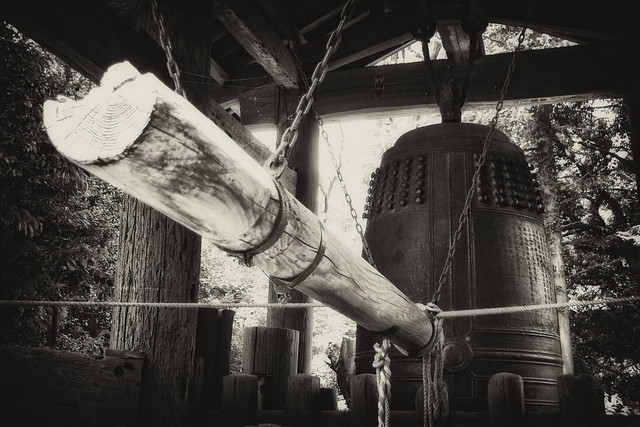
A Bell At Enkakuji Temple, Kamakura, Japan
Photography by El-Branden Brazil
Photography by El-Branden Brazil

Photography by El-Branden Brazil

Photography by El-Branden Brazil
The majestic peak of Mount Fuji represents the Japanese like no other natural feature. This almost perfect volcanic cone stands watch over Tokyo, revealing itself often during the dry winter months.
Whilst not a giant mountain on the scale of the Himalayan peaks, it does measure 3776 meters, so whilst accessible for trekkers, it is high enough that it requires respect.
Between the months of June to September, the mountain opens to people driven to climb to its peak. Other times of year are off limits to anyone other than expert mountaineers; brave enough to face its icy slopes and fierce weather conditions.
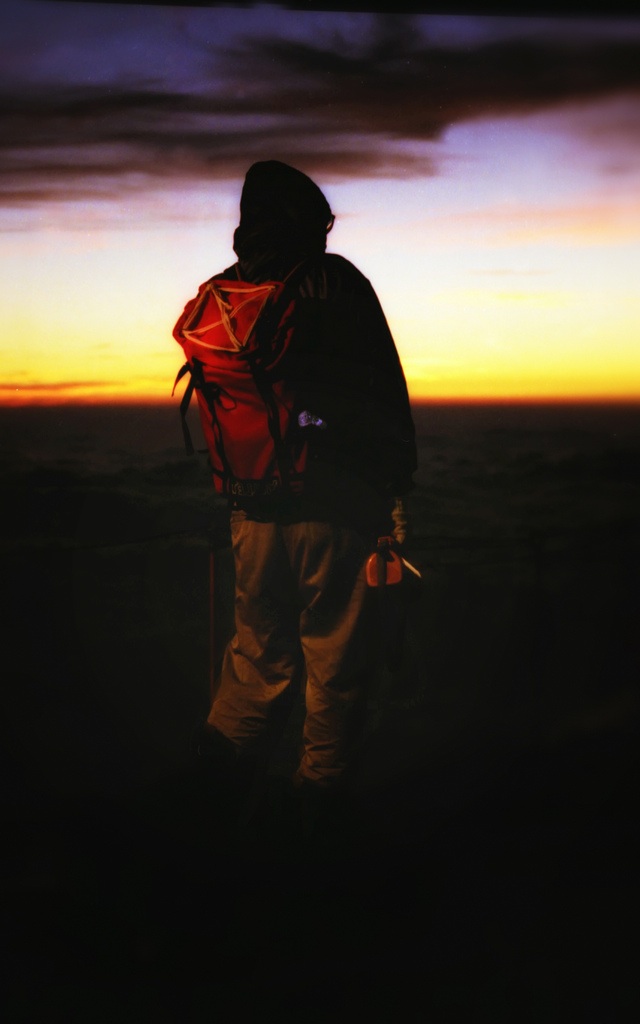
Most summer climbers attempt the challenge during the night, so that the dawn can be witnessed from the summit. Whilst the path leading up is fairly straightforward, it is recommended that all climbers wear sturdy hiking boots with good ankle support, as well as a daypack to carry warmer clothes for the peak, where the temperatures drop enormously from the summer humidity at the base.
Photography by El-Branden Brazil
Anyone assuming to scale this mountain with Romantic inclinations of doing so alone, will be sorely disappointed by the caterpillar of well-rigged Japanese hikers, crawling slowly and methodically up. Many of them stay at several of the over-priced, basic lodges that mark each of the nine stages to the top.
As the climber zigzags up to the seventh stage, the path suddenly alters into a more stimulating challenge, that requires clambering up on rocks, using chains to grab on to. The air also becomes thinner and thinner, especially after passing the 3000 meter mark. Some people carry small canisters of oxygen to avert altitude sickness. However, many of these people have finished their canisters well before they were needed.
The climb, whilst popular, is not as easy as many people assume it to be. It is a real mountain that requires stamina and perseverance. There are many who find the challenge too much, and backtrack down disappointed.
The legs become stiffer and the air cooler, as the night continues on. If the weather conditions are fine, a starlit sky of such clarity accompanies, with the dull blue clouds below, illuminated by the moon. The heart pounds ferociously and the lungs and throat become parched, but those moments of silence among the stars, when rest is called upon, are unforgettable.
Once at the peak, it is a surprise to find a large lodge, offering drinks, noodles and Japanese boiled foods, called Oden. It makes for a comfortable place to linger, whilst waiting for the twinkle of dawn to manifest.
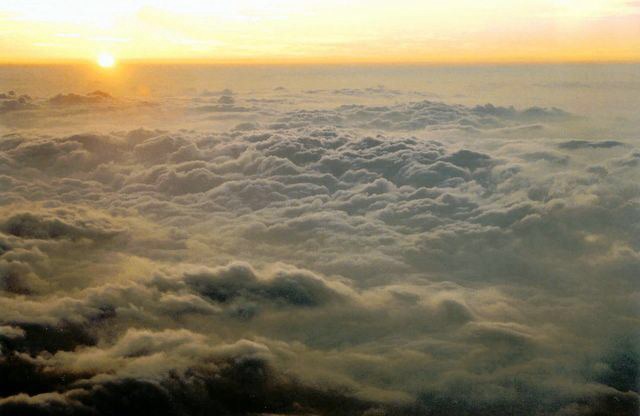
Slowly, the darkness begins to fade, as the Sun begins its ascent upon the horizon. People assemble their cameras, many shaking with the chilling, biting wind. There, breaking above the clouds, a bright shaft of light pushes out. As this happens, everyone shouts out “Banzai! Banzai!”
Very soon, the sky is dominated by the brilliant sun, which illuminates Fuji, revealing the deep crater that leads to the heart of the mountain. In the daytime, the dormant volcano transforms into an entirely different environment, appearing very similar to Mars, with its red rock.
The descent down is the hardest part of the trek. Climbers without walking sticks, find themselves slipping repeatedly on the round, sharp volcanic stones that litter the winding pathway. The Sun also bakes those foolish enough not to bring a hat or sun block.
After a somewhat monotonous climb down, the exhausted climber finally reaches the bus stop, where the coaches come to ferry city dwellers back to the concrete jungle of modern Tokyo.
Photography by El-Branden Brazil
Photography by El-Branden Brazil

Photography by El-Branden Brazil
High quality A3 size prints are available for purchase at my online store.

Photography by El-Branden Brazil
Photography by El-Branden Brazil
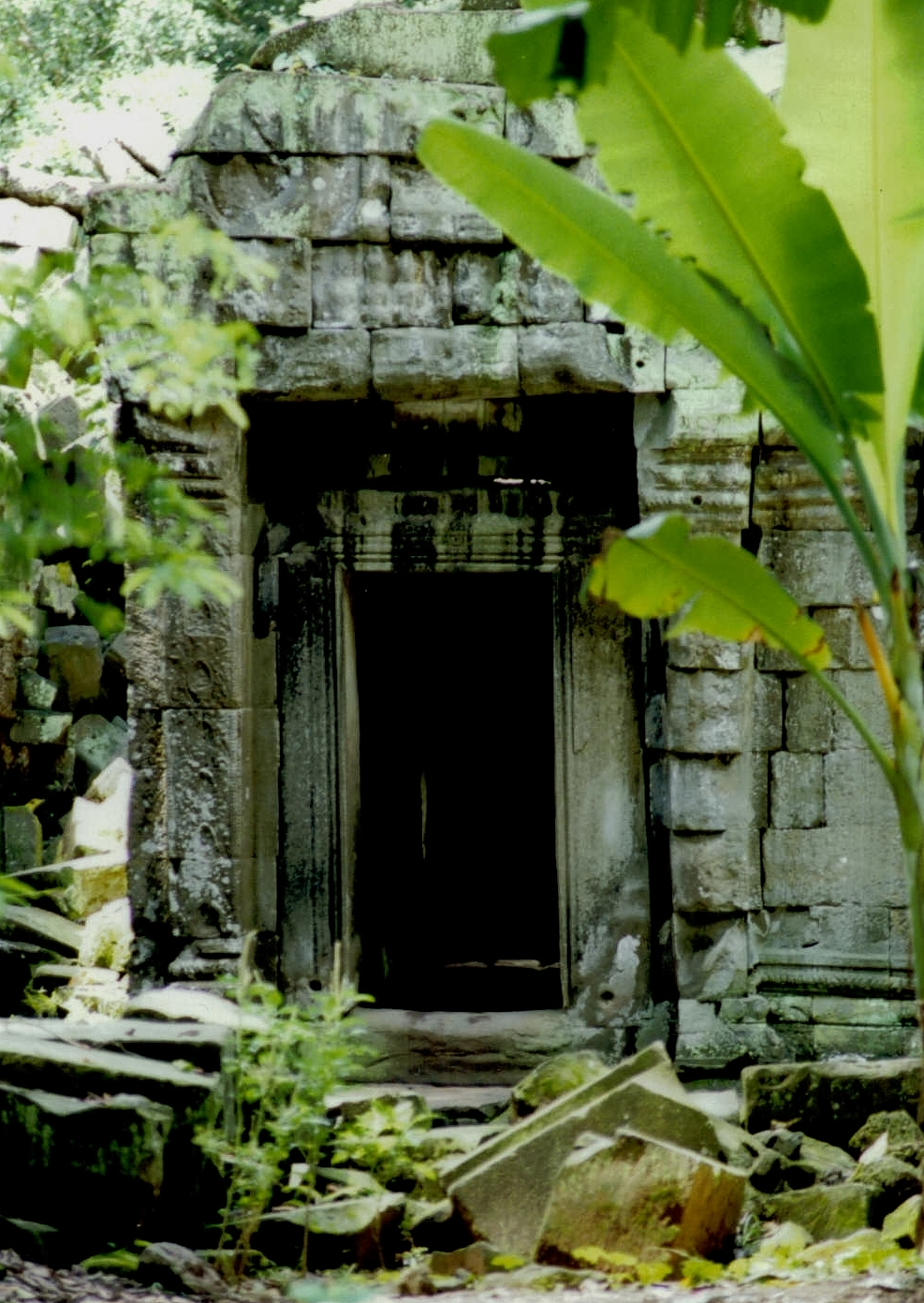
In fantasy literature, a reoccurring theme that is present in a vast number of classic tales, is that of portals to other worlds.
Whether it is Lewis Carroll’s Alice In Wonderland, J.M. Barrie’s Peter Pan, Frank L. Baum’s The Wizard Of Oz, Alan Garner’s Elidor, H.P. Lovecraft’s Dreamlands, or J.K. Rowling’s Harry Potter series, all the heroes and heroines of the tales are drawn into exotic lands through some magical entrance between two realities. Arguably, the most popular stories to utilize this theme are C.S. Lewis’s classic Chronicles of Narnia; the most famous being the wardrobe in The Lion, The Witch & The Wardrobe.
This literary tradition has a deep root in human consciousness. Throughout the history of humanity, whether it be through religious, scientific or mystical means, the exploration of inner space, has allowed access to levels of reality and existence beyond the senses. All great art is a manifest of the hidden, whether it is an emotional response in abstraction, or a piece conjured up from within the imagination.
In Aldous Huxley’s The Doors Of Perception, he writes about the powerful experiences he had whilst using the hallucinogenic chemical, mescaline. Again, the metaphor of a door or entrance is used to express the boundary between the everyday world and that of the altered state.
It was Huxley’s conviction that certain substances could open the mind to a reality untainted by sensory prejudices. This belief was not his alone, and has been an integral part of shamanic beliefs the world over, for thousands and thousands of years. It is by no accident that Alice ingests strange chemicals on her journey through Wonderland.
The creation of sacred spaces within a religious context, whether as a church, temple or shrine, or an improvised circle for ritual, are all places where everyday consciousness is banished, and altered states invoked. When we enter a place of worship, the symbols that surround us, trigger a referential change within that allows for prayer, communion with God, or the manifestation of spirits and magic.
The ultimate portal, which is the driving force behind all others, is death – the passing from one state of existence into another. At the centre of all religions, concepts of death dominate; even for the Atheist, who believes that it leads to a bleak black slumber of non-existence.
Shakespeare writes rather solemnly of the crossing over in Hamlet:
In J.R.R. Tolkien’s The Lord Of The Rings, there is a beautifully reassuring passage describing the threshold of death:
‘The grey rain-curtain turned all to silver glass and was rolled back, and he beheld white shores and beyond them a far green country under a swift sunrise.’
Wouldn’t it be spectacular to step beyond faith, speculation, cultural indoctrination, hearsay, imagination, fantasy, convenience and lies, so as to really know what ABSOLUTE TRUTH is? To truly know what lies beyond the universe? Is the universe a construct of our minds? Do we live in a holographic universe? What is the purpose of the universe? Is there life after death? What is time? Does God need to exist? Is it all but a simulation? If so, who built the simulation? Is there no purpose to anything? Is ultimate reality inherently empty? Does intelligence exist elsewhere? How is consciousness possible? What is the mind? What are we? What am I?
…to know if the dream is a dream.
Photography by El-Branden Brazil
Photography by El-Branden Brazil
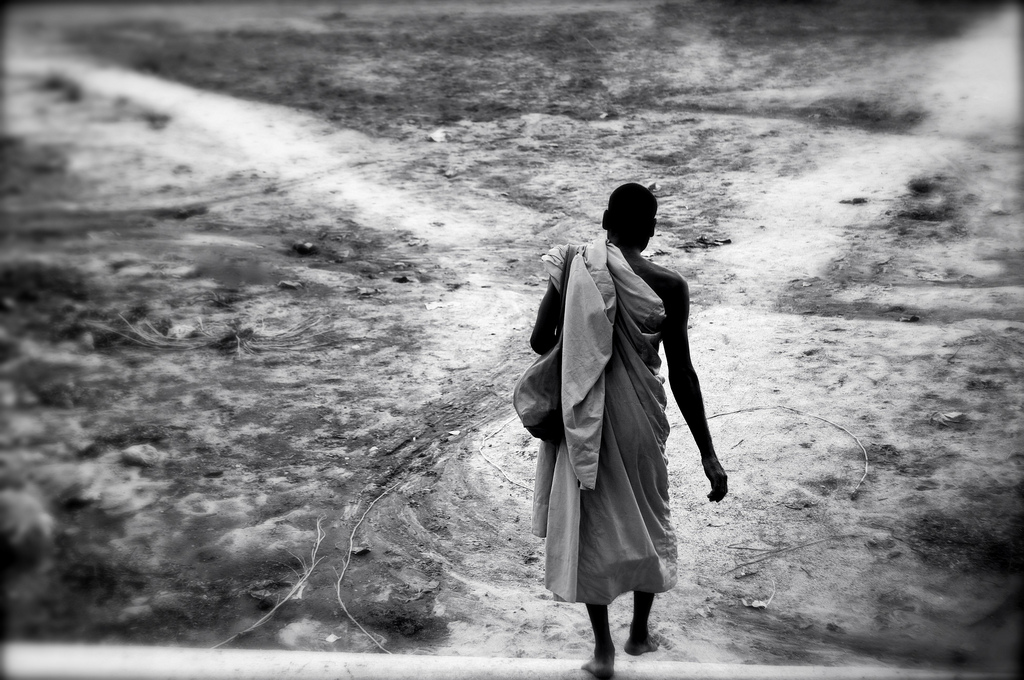
This image was taken of a monk in Bodhgaya, India. It was used for the cover of a Mexican book on Buddhism, which you can see below.
Photography by El-Branden Brazil

Photography by El-Branden Brazil
 El-Branden Brazil