El-Branden Brazil

Photographer, Writer & Mystic Traveller

Posts tagged ‘Mystery’

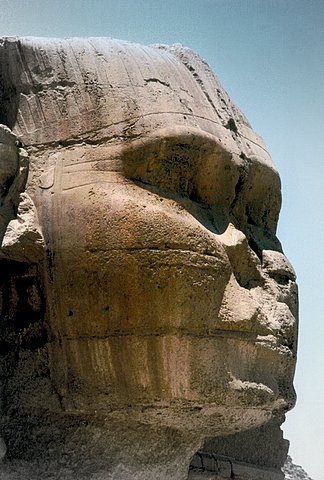
The Sphinx – Time’s Guardian
image

Photography by El-Branden Brazil

Time’s stalwart guardian, the Sphinx, has seemingly forever sat upon the Giza Plateau. In fact, according to most estimates, this enigmatic creation is believed to have been built when Khafra’s pyramid was constructed between 2558 to 2532 BC.

The term sphinx comes from the Greek for strangler; although it has been suggested that the word originates from the ancient Egyptian phrase shesep ankh (living image).

Many scholars have surmised that the face of this fantastical creature is, in fact, an image of Pharaoh Khafra himself; although this has still yet to be confirmed. It certainly seems plausible, as the Sphinx stands at the end of a ritual causeway that leads up to Khafra’s pyramid.

Recently, there has been a lot of contention regarding the accepted age of the Sphinx. Some scientists have suggested that the Sphinx may belong to an older civilisation, dating as far back as 12,000 years. These controversial conclusions were founded upon the level of erosion that has affected the main body of the sculpture. The maverick scientists who promote these theories, believe that the erosion lines could only have appeared during a period of high moisture in the region, pre-dating the age of the Pharaohs by thousands of years, during a period that followed the last great Ice Age. If this could be proven, then the history of civilisation would have to be radically updated.

Traditional Egyptologists are not swayed by such ideas, as they are not by the predictions of American mystic, Edgar Cayce, who had visions of a lost library of ancient wisom laying within the Sphinx. There have been several legitimate excavations to discover if, indeed, a space within exists. Towards the back of the sandstone statue near its tail, a small, hollow chamber was discovered, but nothing that would hint towards a larger, more important inner complex.

With a maximum height of 20 metres, and a length of 73 metres, the Sphinx instantly enthralls the visitor with both powerful mythology and ancient history. There are efforts to preserve it from the increasing threat of Cairo’s pollution, which is causing the Sphinx to suffer from stone’s equivalent of cancer. How much reconstruction should be done, has been a source of great contention, but with the current environmental assault, if work is not continued, this fabled art piece will be challenged to survive another millennium.

Photography & Report by El-Branden Brazil
Thresholds To Secret Gardens

Photography by El-Branden Brazil

Photography by El-Branden Brazil

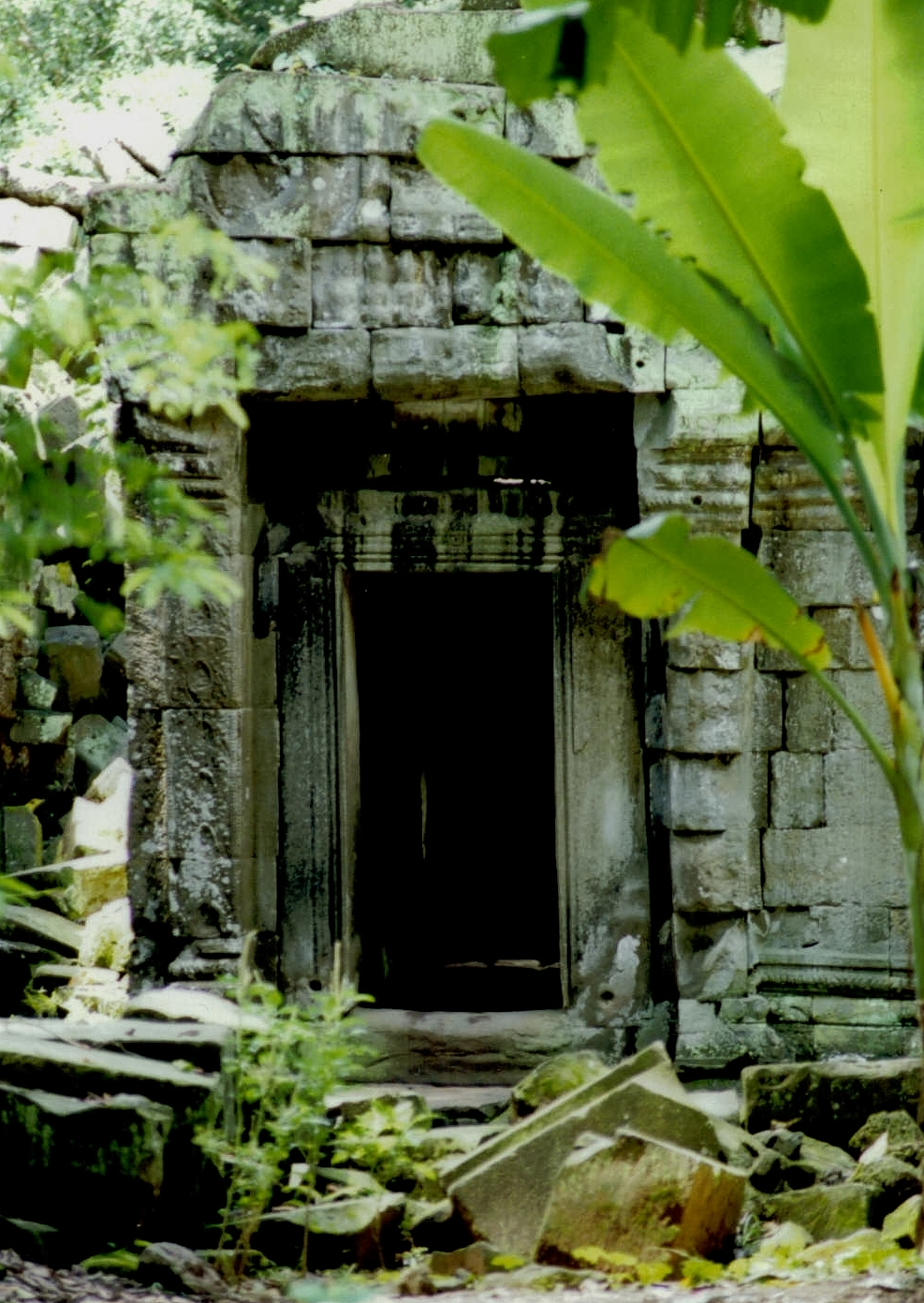
In fantasy literature, a reoccurring theme that is present in a vast number of classic tales, is that of portals to other worlds.

Whether it is Lewis Carroll’s Alice In Wonderland, J.M. Barrie’s Peter Pan, Frank L. Baum’s The Wizard Of Oz, Alan Garner’s Elidor, H.P. Lovecraft’s Dreamlands, or J.K. Rowling’s Harry Potter series, all the heroes and heroines of the tales are drawn into exotic lands through some magical entrance between two realities. Arguably, the most popular stories to utilize this theme are C.S. Lewis’s classic Chronicles of Narnia; the most famous being the wardrobe in The Lion, The Witch & The Wardrobe.

This literary tradition has a deep root in human consciousness. Throughout the history of humanity, whether it be through religious, scientific or mystical means, the exploration of inner space, has allowed access to levels of reality and existence beyond the senses. All great art is a manifest of the hidden, whether it is an emotional response in abstraction, or a piece conjured up from within the imagination.

In Aldous Huxley’s The Doors Of Perception, he writes about the powerful experiences he had whilst using the hallucinogenic chemical, mescaline. Again, the metaphor of a door or entrance is used to express the boundary between the everyday world and that of the altered state.

It was Huxley’s conviction that certain substances could open the mind to a reality untainted by sensory prejudices. This belief was not his alone, and has been an integral part of shamanic beliefs the world over, for thousands and thousands of years. It is by no accident that Alice ingests strange chemicals on her journey through Wonderland.

The creation of sacred spaces within a religious context, whether as a church, temple or shrine, or an improvised circle for ritual, are all places where everyday consciousness is banished, and altered states invoked. When we enter a place of worship, the symbols that surround us, trigger a referential change within that allows for prayer, communion with God, or the manifestation of spirits and magic.

The ultimate portal, which is the driving force behind all others, is death – the passing from one state of existence into another. At the centre of all religions, concepts of death dominate; even for the Atheist, who believes that it leads to a bleak black slumber of non-existence.

Shakespeare writes rather solemnly of the crossing over in Hamlet:

‘But that the dread of something after death,
The undiscover’d country from whose bourn
No traveller returns, puzzles the will
And makes us rather bear those ills we have
Than fly to others that we know not of?’

In J.R.R. Tolkien’s The Lord Of The Rings, there is a beautifully reassuring passage describing the threshold of death:

The grey rain-curtain turned all to silver glass and was rolled back, and he beheld white shores and beyond them a far green country under a swift sunrise.’