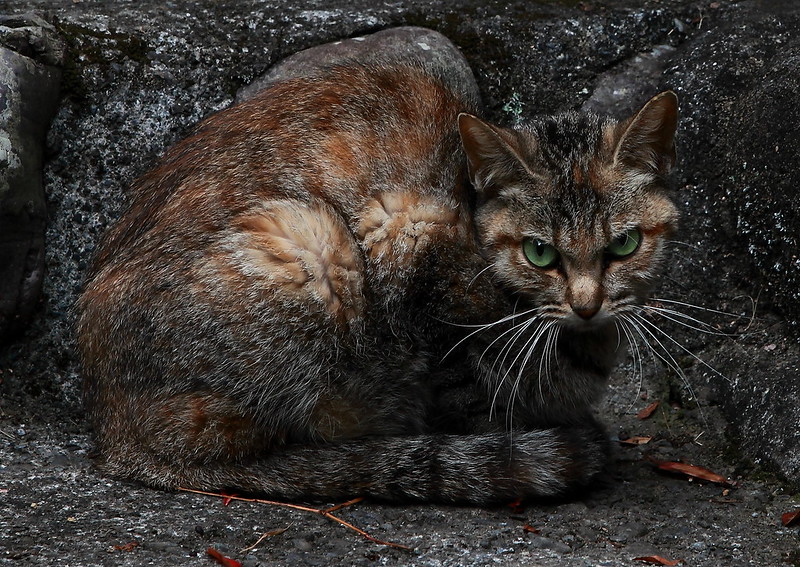
A Zen Temple Cat, Japan
Photography by El-Branden Brazil
Photography by El-Branden Brazil

Photography by El-Branden Brazil

Photography by El-Branden Brazil
Photography by El-Branden Brazil

Photography by El-Branden Brazil
The majestic peak of Mount Fuji represents the Japanese like no other natural feature. This almost perfect volcanic cone stands watch over Tokyo, revealing itself often during the dry winter months.
Whilst not a giant mountain on the scale of the Himalayan peaks, it does measure 3776 meters, so whilst accessible for trekkers, it is high enough that it requires respect.
Between the months of June to September, the mountain opens to people driven to climb to its peak. Other times of year are off limits to anyone other than expert mountaineers; brave enough to face its icy slopes and fierce weather conditions.
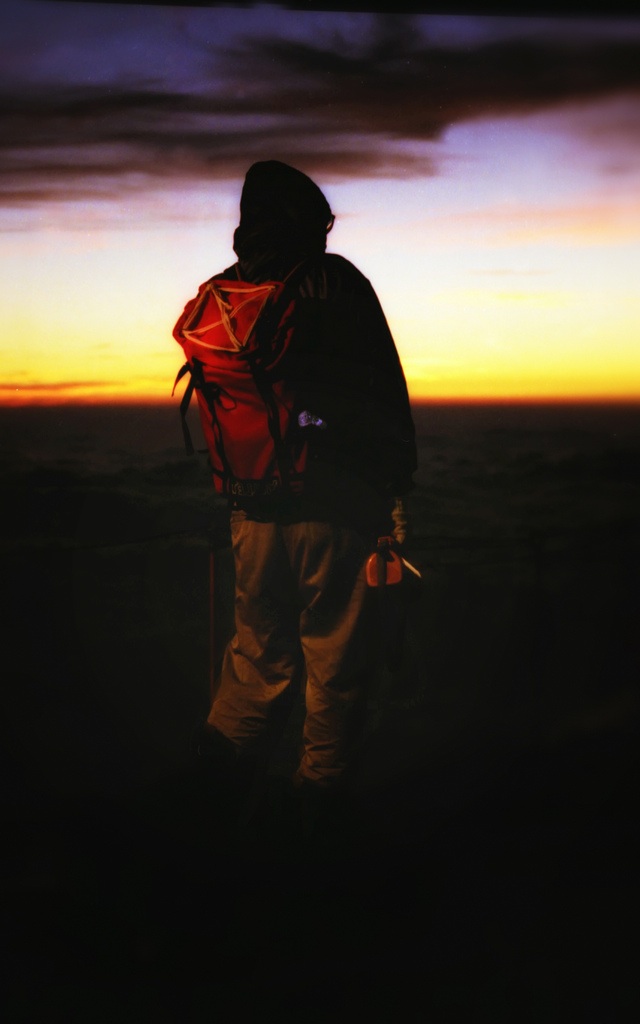
Most summer climbers attempt the challenge during the night, so that the dawn can be witnessed from the summit. Whilst the path leading up is fairly straightforward, it is recommended that all climbers wear sturdy hiking boots with good ankle support, as well as a daypack to carry warmer clothes for the peak, where the temperatures drop enormously from the summer humidity at the base.
Photography by El-Branden Brazil
Anyone assuming to scale this mountain with Romantic inclinations of doing so alone, will be sorely disappointed by the caterpillar of well-rigged Japanese hikers, crawling slowly and methodically up. Many of them stay at several of the over-priced, basic lodges that mark each of the nine stages to the top.
As the climber zigzags up to the seventh stage, the path suddenly alters into a more stimulating challenge, that requires clambering up on rocks, using chains to grab on to. The air also becomes thinner and thinner, especially after passing the 3000 meter mark. Some people carry small canisters of oxygen to avert altitude sickness. However, many of these people have finished their canisters well before they were needed.
The climb, whilst popular, is not as easy as many people assume it to be. It is a real mountain that requires stamina and perseverance. There are many who find the challenge too much, and backtrack down disappointed.
The legs become stiffer and the air cooler, as the night continues on. If the weather conditions are fine, a starlit sky of such clarity accompanies, with the dull blue clouds below, illuminated by the moon. The heart pounds ferociously and the lungs and throat become parched, but those moments of silence among the stars, when rest is called upon, are unforgettable.
Once at the peak, it is a surprise to find a large lodge, offering drinks, noodles and Japanese boiled foods, called Oden. It makes for a comfortable place to linger, whilst waiting for the twinkle of dawn to manifest.
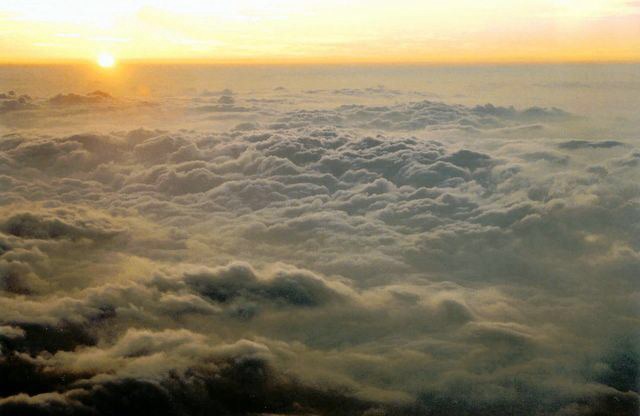
Slowly, the darkness begins to fade, as the Sun begins its ascent upon the horizon. People assemble their cameras, many shaking with the chilling, biting wind. There, breaking above the clouds, a bright shaft of light pushes out. As this happens, everyone shouts out “Banzai! Banzai!”
Very soon, the sky is dominated by the brilliant sun, which illuminates Fuji, revealing the deep crater that leads to the heart of the mountain. In the daytime, the dormant volcano transforms into an entirely different environment, appearing very similar to Mars, with its red rock.
The descent down is the hardest part of the trek. Climbers without walking sticks, find themselves slipping repeatedly on the round, sharp volcanic stones that litter the winding pathway. The Sun also bakes those foolish enough not to bring a hat or sun block.
After a somewhat monotonous climb down, the exhausted climber finally reaches the bus stop, where the coaches come to ferry city dwellers back to the concrete jungle of modern Tokyo.
Photography by El-Branden Brazil
Photography by El-Branden Brazil
When I was a young child, I began to have an interest in Buddhism. This started from curiosity about the strange, mysterious Eastern statues that cluttered my late uncle’s house in London. He had a fine collection of Buddhas from all corners of Asia; each displaying their individual cultural design. There was something intriguing in their benevolent smile that just enticed me to learn more.
At 12, I started to build a small collection of books devoted to mysticism around the world. I prized a set of encyclopaedias, called Man, Myth & Magic, which covered every topic regarding occultism, religion, legends and Anthropology. Within, were a grand array of images that to this day remain potent in my mind; particularly those of Buddhist monks meditating at Zen gardens in Japan.
In a secondhand bookshop in London, I purchased my first book on Zen, written by Christmas Humphreys. It was a slender volume, with an image of an Asian tiger on the front. The next book I purchased on the subject, again in London, was a delightful tome by Shunryu Suzuki, Zen Mind, Beginner’s Mind. I found this book to be a clear gateway into understanding the point – if there is indeed a point – to Zen.
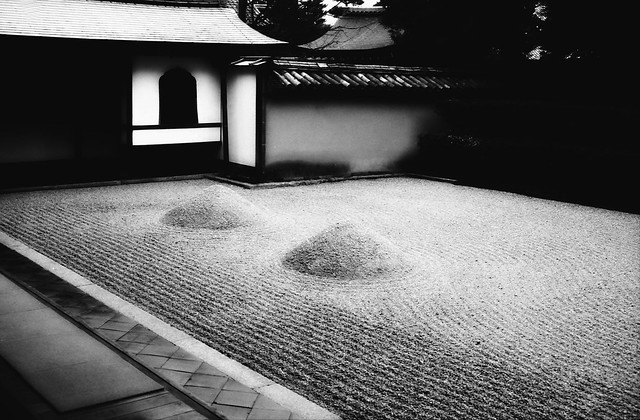
In those young years, Zen had enormous appeal to me, even though I had much to learn. I adored the design and art of Zen, with their pristine, clear gardens of raked gravel and precisely placed rocks. It was exotic for a small English boy dreaming of travelling to far-flung places. I kept this interest quiet, as I was a non-Catholic at a Catholic school.
At long last, I finally completed my school studies, graduated from university and I was now an adult free in the big old world. Within six months of graduation, I moved to Japan. Inevitably, high on my priority list of places to visit in this most curious of countries were the Zen temples of Kamakura. It was a childhood dream to see with my very own eyes the scenes that had attracted me so much in the pages of my books.
In no time, I was heading away from Tokyo to my first Zen temple, on what now seems like such an innocent adventure into the unknown. I got off the train in Kita-Kamakura and took a short walk to a nearby temple, called Enkaku-ji. I felt myself pulsating with joy to see a real living Zen temple.
Enkaku-ji was selected by the Hojo clan, towards the end of the Kamakura period – when the town was the capital of Japan – as one of the five most important Zen temples. The Rinzai school of Zen is practiced within, and to this day, it remains an important place for the study of Zazen (meditation).
As I moved closer to the main central complex, enamoured with delight, I came across a small door, with an improvised sign stuck to it. Written on a piece of paper, in English, were the clear words ‘Come in.’ My mind was abuzz with excitement that just maybe I would finally meet a real Zen monk within, who would take me under his wing and lead me to Satori (instant enlightenment). I clasped the small ring handle and turned it, full of trepidation and curiosity…
…The door opened and at this point, a monk, dressed in black robes, came screaming towards me, ‘GET OUT! GET OUT!’ It was not the moment I had dreamt of as a child! I quickly made a retreat, feeling ejected, rejected and dejected that I had been scorned by a holy man for opening a door.
As I walked away, I started to chuckle to myself, as I realised what a classic Zen lesson I had been taught. Instantly, the ‘exotic’ which had intoxicated my mind, and had become a distraction from a truer understanding of Buddhism, was now instantly removed. For the first time, I recognised that the tranquil, idealised monks in my Western books were, in fact, no different than I. To this day, I thank that monk for treating me in such a brusque manner.

Photography by El-Branden Brazil
I took several images of this beautiful statue of the Bodhisattva Kannon (Avalokiteśvara) at a temple near my home, during Summer, Autumn, Winter and Spring.
Summer

Autumn
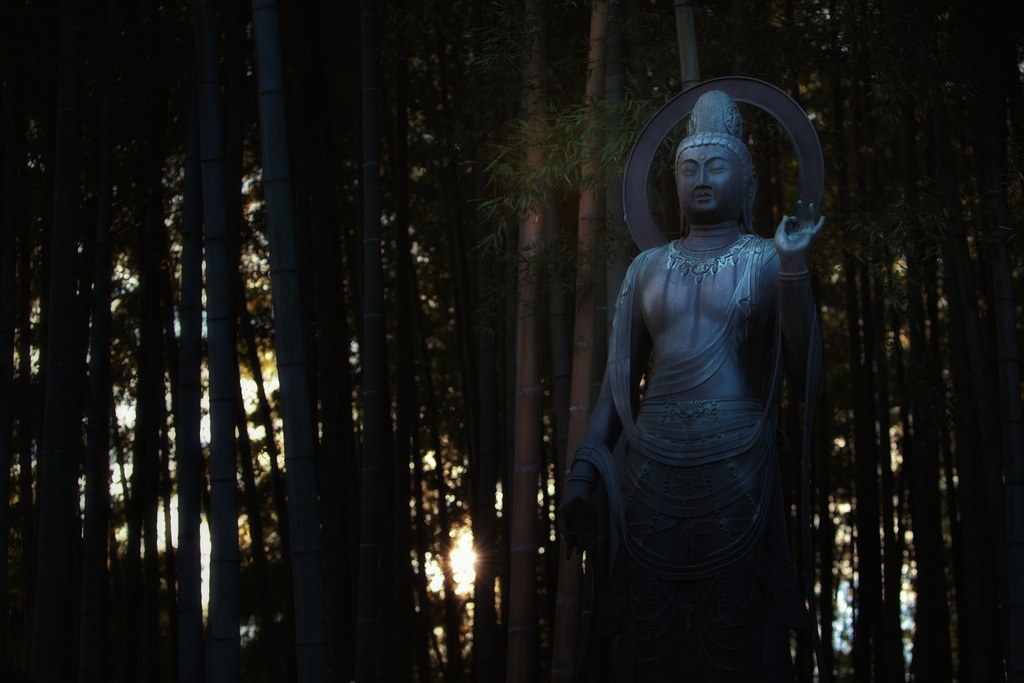
Winter
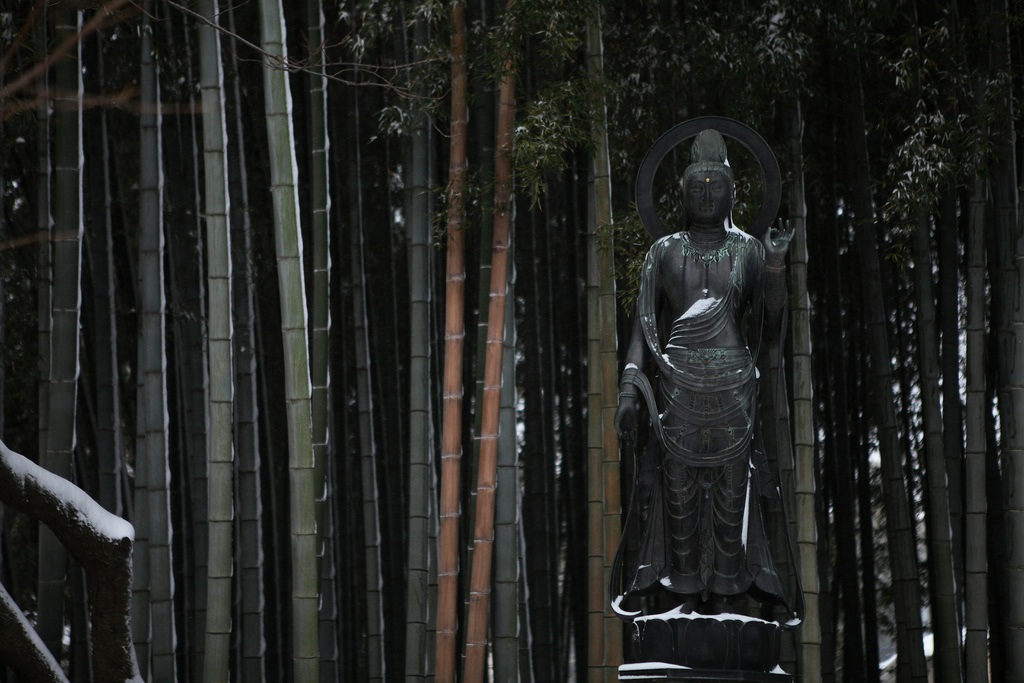
Spring
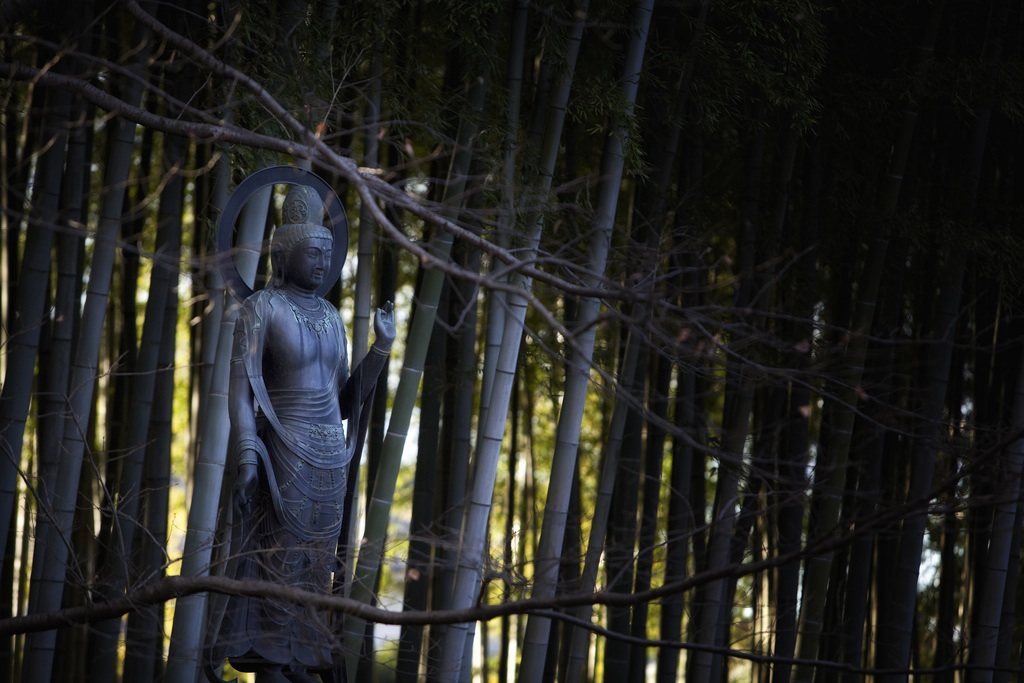
Photography by El-Branden Brazil
 El-Branden Brazil