A Laotian Novice Monk Crosses A Bridge

Photography by El-Branden Brazil
Photography by El-Branden Brazil
I’m a Buddhist. I practice Zazen (Zen meditation) regularly, I read, I contemplate. I also acknowledge that I don’t yet know ultimate Truth. To pretend to do so would be arrogance in the extreme.
My faith connects with me and helps me find meaning through the mysteries of everyday life and beyond. I personally believe that Lord Buddha’s teachings offer a very practical path to finding peace.
…What I believe, doesn’t mean I am necessarily right. I can no more prove my beliefs to be true than anyone else of another faith. My beliefs alone make no difference to the world, other than give me a label. It is how I act in the world that matters.
I have Christian, Muslim, Pagan, Jewish, Hindu and many other friends of faiths, who are close friends. There is no question that they are very good people, trying to be a force for light, rather than darkness, in the world. We have mutual respect for each other, and share in a single goal for peace, understanding and love.
We all need to celebrate together our wide-eyed, shared appreciation for the mystery of the Universe. Together, we should hold hands and breathe in the brief moment that is allowed us to explore it. We should waste no time fighting each other.

Photography by El-Branden Brazil

Photography by El-Branden Brazil
Let’s all work for peace, and encourage an end to all suffering.
Let’s continue to campaign for those who need help and support.
Let’s change the world with positivity and love.
Let’s find friendship with those we thought could never be our friends.
Let’s be tolerant and appreciative of the diversity of lifestyles and faiths.
Let’s try to become informed about the things we don’t understand.
Let’s make bridges between all nations.
Let’s be resolute in finding inner peace and beauty.
Let’s be wise in every decision we make.
Let’s be generous in spirit and heart to those in need.
– El-Branden Brazil

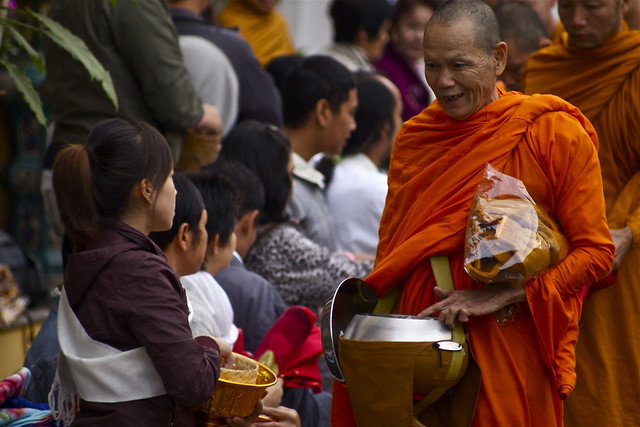
Ashin Sopaka, one of the leaders of Burma’s Saffron Revolution, has been supporting Burmese refugees and migrant workers, who live on a dump in Mae Sot, Thailand.
Photography by El-Branden Brazil
Photography by El-Branden Brazil
 Whilst I was visiting Kochi in southern India, in 2004, I purchased a book, A Search For Secret India by Paul Brunton. It is a wonderfully nostalgic read, as it was written back in 1933. The book charts the adventures of the author in his quest to find genuine gurus and purveyors of Truth. What attracted me to the book, was the backcover’s claim that Mr Brunton finally discovered a true master. Regardless, the book was an enchanting travel companion.
As my journey in India was coming to a close, I found myself in delightful Pondicherry. I had reached a point where I was too close to Chennai to make any further long distance excursions, but I did not want to spend all my remaining time in either Pondicherry or Chennai. I asked some of the tsunami relief volunteers I had worked with, if they recommended any places to visit. They suggested that I go to Thiruvannamalai, which is located about two and a half hours drive inland from Pondicherry, because it is home to one of Hinduism’s holiest temples. I had no knowledge of this place, but it seemed conveniently located for my return journey to Chennai.
The night before my departure, I arranged for a car to take me to Thiruvannamalai. The Hindu man who helped arrange my driver, asked me if I was visiting the ashram (a spiritual hermitage or a monastery). I had no idea which ashram he was talking about, but rapidly our conversation evolved into one concerning mystical issues. I was immediately taken by the tone of this enigmatic and fascinating man. As I was leaving, he grabbed both my hands, and with deep conviction, asked for God to touch me. It was unexpected and very potent.
The next morning, a driver was there waiting for me at my hotel. When I got into the car, he asked where I was staying in Thiruvannamalai. Before I could even answer, he suggested the ashram. Since I had not yet organised a potential hotel to stay, I agreed to be dropped off at the mysterious ashram that I had no knowledge of at all. At least when I stayed at Amachi’s ashram during that Christmas, I knew of her movement.
As we approached Thiruvannamalai, I was immediately struck by the dominating mountain of Arunachala – a giant rocky peak of red and grey stone. In my ignorance, I did not realise that I was at one of the holiest Hindu sites, where the god, Lord Shiva, is thought to reside. Pilgrims climb the steep, stony peak barefooted each day.
In the shadow of the mountain, is the impressive Arunachala temple. It is very similar in design and scale to the temples found in Madurai, except the towers remain in their natural stone shades, as opposed to the usually gaudy-painted variety.
We finally arrived at the enigmatic ashram. I paid my driver and headed through the gates. As to be expected, I discovered the usual Indian-garbed Westerners, as I walked up to the office. I asked for accomodation, but was abruptly told that without a reservation it was impossible to stay. The manner was very curt, so I decided to leave immediately. I was, to say the least, unimpressed. I took an auto rickshaw back into town, and managed to get a basic, but very clean room at the friendly Trishul Hotel, which is located very closely to the temple.
After strolling about the vibrant town, I settled in for the night with my engrossing book, A Search For Secret India. I was flicking through the back pages, when suddenly the word “Arunachala” caught my eye. As I read further, the guru who had so impressed Paul Brunton in the 1930’s, was none other than Sri Ramana Maharshi, the guru whose ashram I had briefly visited that day. Suddenly, Brunton’s book came alive, as he described places that were all around me. I had to find out more about this guru who I knew so little about.
In Brunton’s book, he describes astounding experiences shared with Maharshi, who would meditate for hours a day. According to various biographical sources, it seems that Maharshi had been profoundly moved by an experience he had when he was 16, where he was given an insight into the nature of death. After his mystical revelation, against the wishes of his parents, he travelled from Madurai to Arunachala, where he remained until his death in 1950. He desired no followers, gifts or support, other than donations of food, and spent his younger years in a tiny cave on the mountain. Gradually, this charismatic man soon gained a reputation for his incomparable insights, and a small, basic ashram was built for him, at the base of Arunachala.
Brunton, who had searched across India for men of divine wisdom, finally found Maharshi, and was immediately taken by this great man. What impressed him enormously, was Maharshi’s lack of interest in acquiring disciples of any type. People who shared space with Maharshi, were often touched by some sort of exceptional vibration that would imbue a taste of enlightenment.
This certainly engaged my interest, and I was particularly curious about the manner in which I had ended up in this town. There were so many synchronistic moments that seemed to have some underlying reason for I being here. Of course, it could also be down to chance and coincidence, but the magic of India had intoxicated me with spiritual potentials. Instead of staying only a couple of days, I had to extended my time.
 When I returned to the ashram the next day, I was immediately aware of how simple and small it was, compared to the grandiosity of the other ashrams I had visited. This was not a place designed to impress or convert people; it was rather a humble place of devotion and meditation. Even the Westerners there, seem like a calmer, less phony group. Perhaps, the teachings of Maharshi are so precise that there is no room for the luxury of phoniness.
I must admit, as I sat next to the hall where Brunton had experienced such an overwhelming connection with Maharshi, all those years back in 1932, I felt that this was the closest that I have perhaps ever come to a truly enlightened man, even though he had passed away so long ago.
The motivation that drove Maharshi was entirely selfless and unique, with none of the self-promotion that follows so many gurus. Maharshi’s teachings, as I rudimentarily understand them, are entirely in accordance with the deepest insights to be found in all religions. He does not promote a particular religion, but rather a way forward for attaining happiness. What an honour it was to discover one of those rare lights of humanity.
I later met the Indian man who had been curt with me previously when I arrived, and found him to be charming and informative. Walking around the ashram undisturbed, it gave me enormous pleasure to find the spots where Brunton had experienced incidents so long ago. The calm of that humble ashram will remain forever with me, and I hope that I will once again visit.

Photography by El-Branden Brazil
Photography by El-Branden Brazil
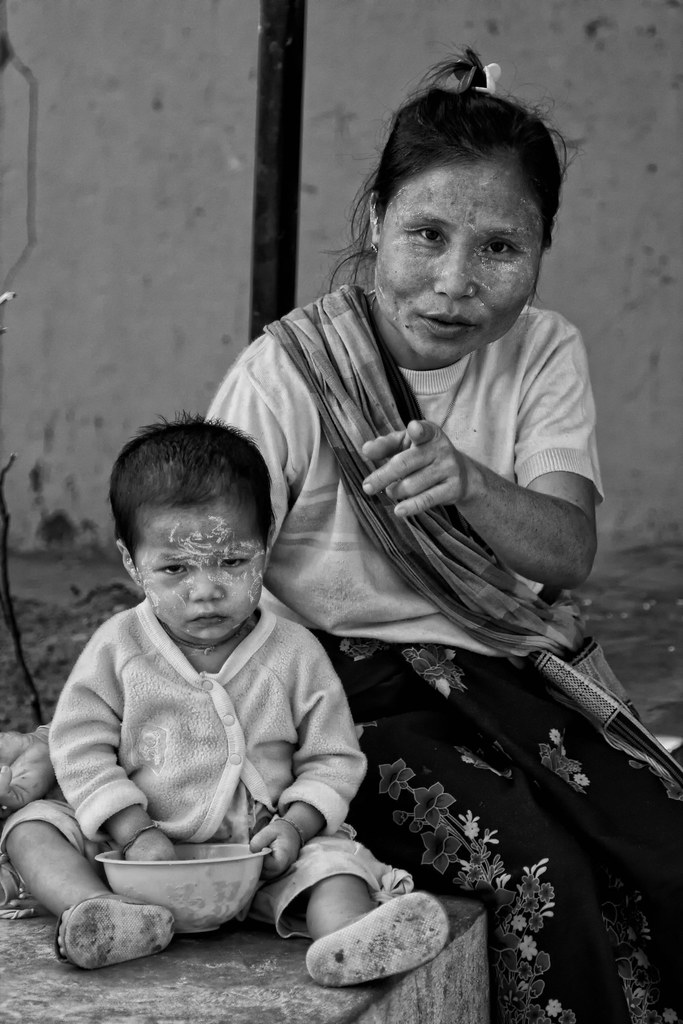
The Mae Tao Clinic (MTC), founded and directed by Dr. Cynthia Maung, providing free health care for refugees, migrant workers, and other individuals who cross the border from Burma to Thailand. People of all ethnicities and religions are welcome at the Clinic. Its origins go back to the student pro-democracy movement in Burma in 1988 and the brutal repression by the Burmese regime of that movement. The fleeing students who needed medical attention were attended in a small house in Mae Sot.
Since 1989 MTC has grown, from that one small house to a large complex of simple buildings that provide a wide variety of health services to different groups of people. Today it serves a target population of approximately 150,000 on the Thai-Burma border. Exact numbers are hard to calculate because of the fluidity of the population. About 50% of those who come to MTC for medical attention are migrant workers in the Mae Sot area; the other 50% travel cross-border from Burma for care.
Mae Tao Clinic Objectives:
1. To provide health services for displaced Burmese populations along the Thailand-Burma border.
2. To provide initial training of health workers and subsequent corollary medical education.
3. To strengthen health information systems along the border.
4. To improve health, knowledge, attitudes, and practices within local Burmese populations.
5. To promote collaboration among local ethnic health organizations.
6. To strengthen networking and partnering with international health professionals and institutions.
Please support this vital service. maetaoclinic.org/
Capitalism right now is a rigged game, where only a few have the privilege to write and rewrite the rules in whatever way suits them. As their wealth increases, and they buy themselves into the politicians’ pockets, the rest of us see social benefits in health, education and welfare stripped down, salaries reduced, bills increasing, fears growing and many families unable to adequately feed themselves.
I have no problem with the idea that if you work hard, then you should be rewarded. However, I do have a problem with individuals driven merely by an unquenchable, psychotic thirst for money, who place higher value on greed than compassion for their fellow humans. I have a problem with those of limited talent, but due to birthright, are allowed unfettered privilege. I also have a problem with individuals who are paid millions and millions of dollars in pay-offs and bonuses, whilst smirking and sneering at the rest of us, as we are exploited, sold-out and perennially broke. I despise that those who almost destroyed the global economy, neither see jail cells nor are reprimanded, but instead see their wealth grow on the back of our misery; misery they helped to create. Worst of all, are the scum who find profit in wars.
All I wish to see are mechanisms that are fairer, compassionate and allow for a more even distribution of wealth. The sooner this unbridled capitalism becomes aware that, just like tooth fairies, there is no such thing as sustainable, infinite exponential growth, the sooner we can reel things back in, protect the planet, end poverty and raise sustainably the living standards to a level better for all.
Photography by El-Branden Brazil
Photography by El-Branden Brazil
 El-Branden Brazil