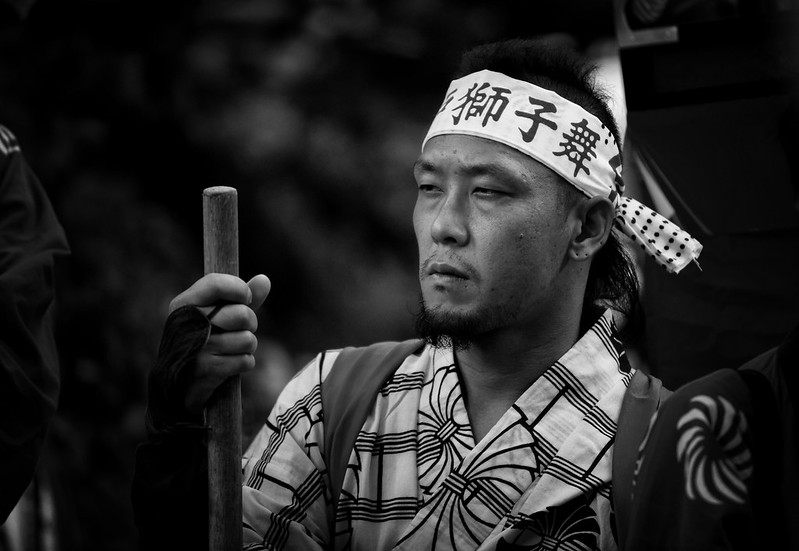
Modern Day Warrior In Tokyo
Photography by El-Branden Brazil
Photography by El-Branden Brazil

FOR IMMEDIATE RELEASE:
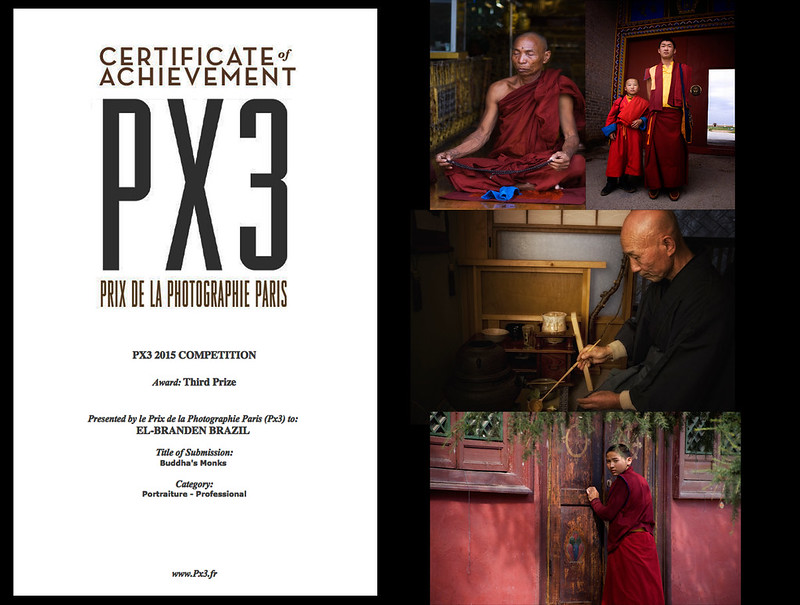
WINNER OF PX3, Prix de la Photographie Paris
EL-BRANDEN BRAZIL OF JAPAN WAS AWARDED THIRD PRIZE IN THE PX3 2015 COMPETITION.
PARIS, FRANCE
PRIX DE LA PHOTOGRAPHIE PARIS (PX3) ANNOUNCES WINNERS OF PX3 2015 COMPETITION.
El-Branden Brazil of Japan was Awarded: Third Prize in category Portraiture for the entry entitled, ” Buddha’s Monks .” The jury selected PX3 2015’s winners from thousands of photography entries from over 85 countries.
Px3 is juried by top international decision-makers in the photography industry: Carol Johnson, Curator of Photography of Library of Congress, Washington D.C.; Gilles Raynaldy, Director of Purpose, Paris; Viviene Esders, Expert près la Cour d’Appel de Paris; Mark Heflin, Director of American Illustration + American Photography, New York; Sara Rumens, Lifestyle Photo Editor of Grazia Magazine, London; Françoise Paviot, Director of Galerie Françoise Paviot, Paris; Chrisitine Ollier, Art Director of Filles du Calvaire, Paris; Natalie Johnson, Features Editor of Digital Photographer Magazine, London; Natalie Belayche, Director of Visual Delight, Paris; Kenan Aktulun, VP/Creative Director of Digitas, New York; Chiara Mariani, Photo Editor of Corriere della Sera Magazine, Italy; Arnaud Adida, Director of Acte 2 Gallery/Agency, Paris; Jeannette Mariani, Director of 13 Sévigné Gallery, Paris; Bernard Utudjian, Director of Galerie Polaris, Paris; Agnès Voltz, Director of Chambre Avec Vues, Paris; and Alice Gabriner, World Picture Editor of Time Magazine, New York.
ABOUT Px3:
The “Prix de la Photographie Paris” (Px3) strives to promote the appreciation of photography, to discover emerging talent, and introduce photographers from around the world to the artistic community of Paris. Winning photographs from this competition are exhibited in a high-profile gallery in Paris and published in the high-quality, full-color Px3 Annual Book.
Visit http://px3.fr
For Press Inquiries, Contact:
Press@px3.Fr.
*YOU CAN SEE THE PHOTOGRAPHS HERE: http://www.px3.fr/winners/zoom2.php?eid=1-51148-15&uid=3248291&cat=Portraiture

Photography by El-Branden Brazil
Photography by El-Branden Brazil

Photography by by El-Branden Brazil

Photography by El-Branden Brazil

Photography by El-Branden Brazil
Burma’s opposition leader, Aung San Suu Kyi, is facing mounting criticism about her silence, regarding the Muslim Rohingya, who remain one of the most persecuted communities in the world. In light of the communal strife that started in 2012 and now with world attention focused upon the stranded boat people, some of whom are Rohingya, fleeing from persecution in Burma, she is feeling great pressure, as a symbol of human rights, to speak out about the Rohingya. Unfortunately, this also clashes with her other persona as a politician.
She finds herself in a deeply unenviable position, where she is trapped between how the Burmese see her and how the rest of the world sees her. For non-Burmese, she is (was) a bastion of human rights, so her silence is disappointing. For the Burmese, she is a politician, who they hope will be able to lead them out of decades of military rule towards real democracy. If she shows any sympathies for the plight of the Rohingya, she will instantly lose her base of supporters, because a vast number of Burmese are unwilling to show any compromise regarding the issue of Rohingya citizenship.
If DASSK becomes no longer a viable opposition leader, as a result of speaking out about the Rohingya, there will form a vacuum that no one can at this time fill, resulting in a further strengthening of the regime’s grip. What can she do? Either lose the respect of the international community or lose the respect of the Burmese? It would seem that her priorities remain at home, even if it means tarnishing her global image.
It is deeply regrettable that she finds herself in this position. It appears as if she has been out-maneuvered by the regime and blocked in.
Ideally, in keeping with her global image, it would have been preferable for her to have taken the human rights path, because there are too few such leaders of her status leading in this field, and the world desperately needs such lights. But, alas, idealism has very little currency in a country like Burma, where brutality and repression have dominated for decades.
Recently, a Burmese man informed me that the reason Aung San Suu Kyi has not spoken out about the plight of the Rohingya is because she shares the same opinion as the majority of Burmese. He was as certain of this, as are the human rights activists, who like to believe the opposite is true. In actual fact, none of us are privy to what her real opinion is on the matter. Either way, a lot of people are going to be disappointed, no more so than Aung San Suu Kyi herself.
Photography by El-Branden Brazil

Photography by El-Branden Brazil
 El-Branden Brazil